
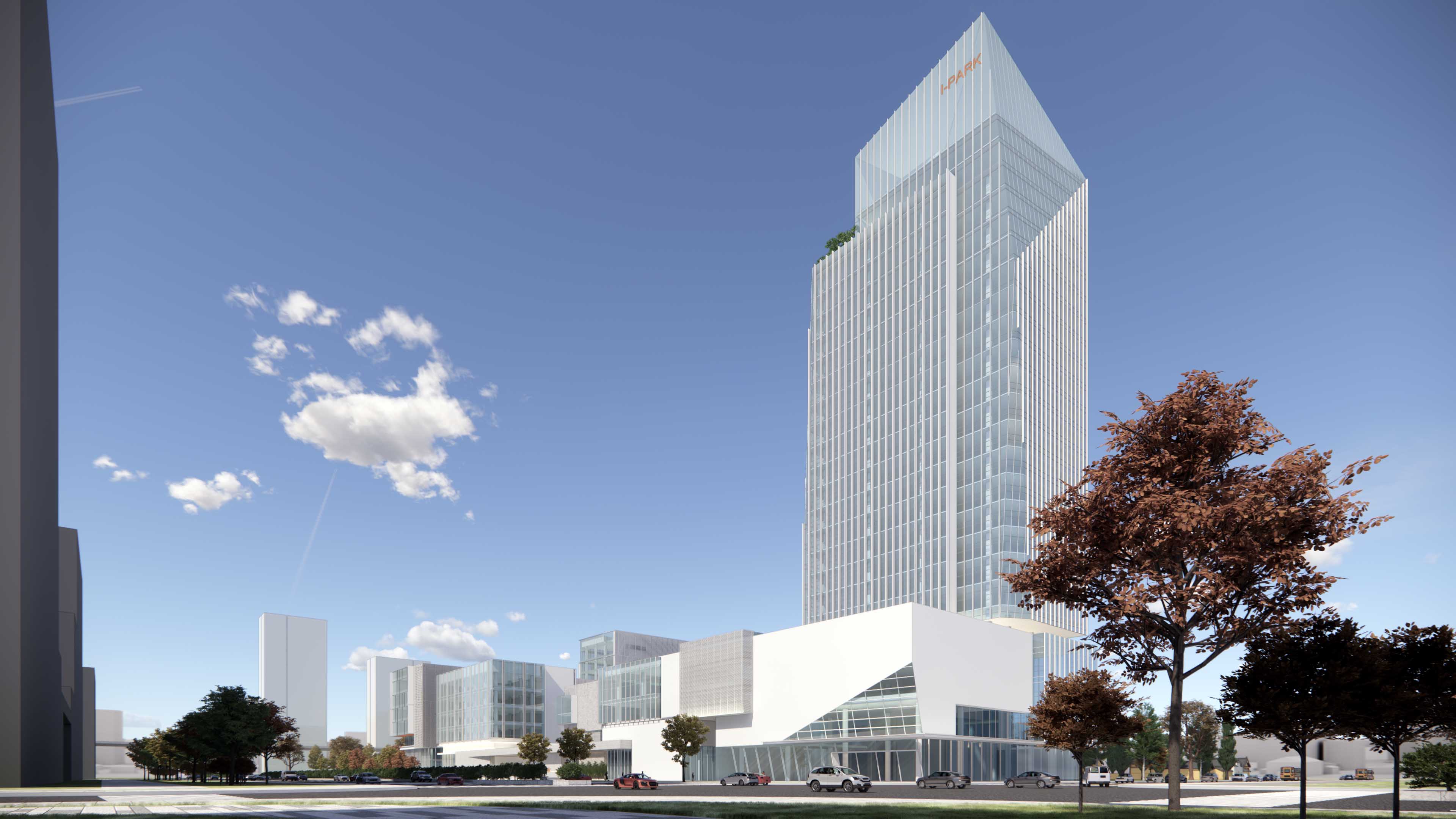
Yuanchuang Zhigu Digital Economy Industrial Park Phase IV, Plot E
Country City:SUZHOU
Area: Site 36,495 sqm; FAR-counted GFA 116,697 sqm; total GFA approx. 133,500 sqm
Type:Office,
Architectural design
Date:2025
Shanghai Yunlu Corporate Headquarters Office Project
Country City:Shanghai
Area:
Type:Office,
Architectural design
Date:2025
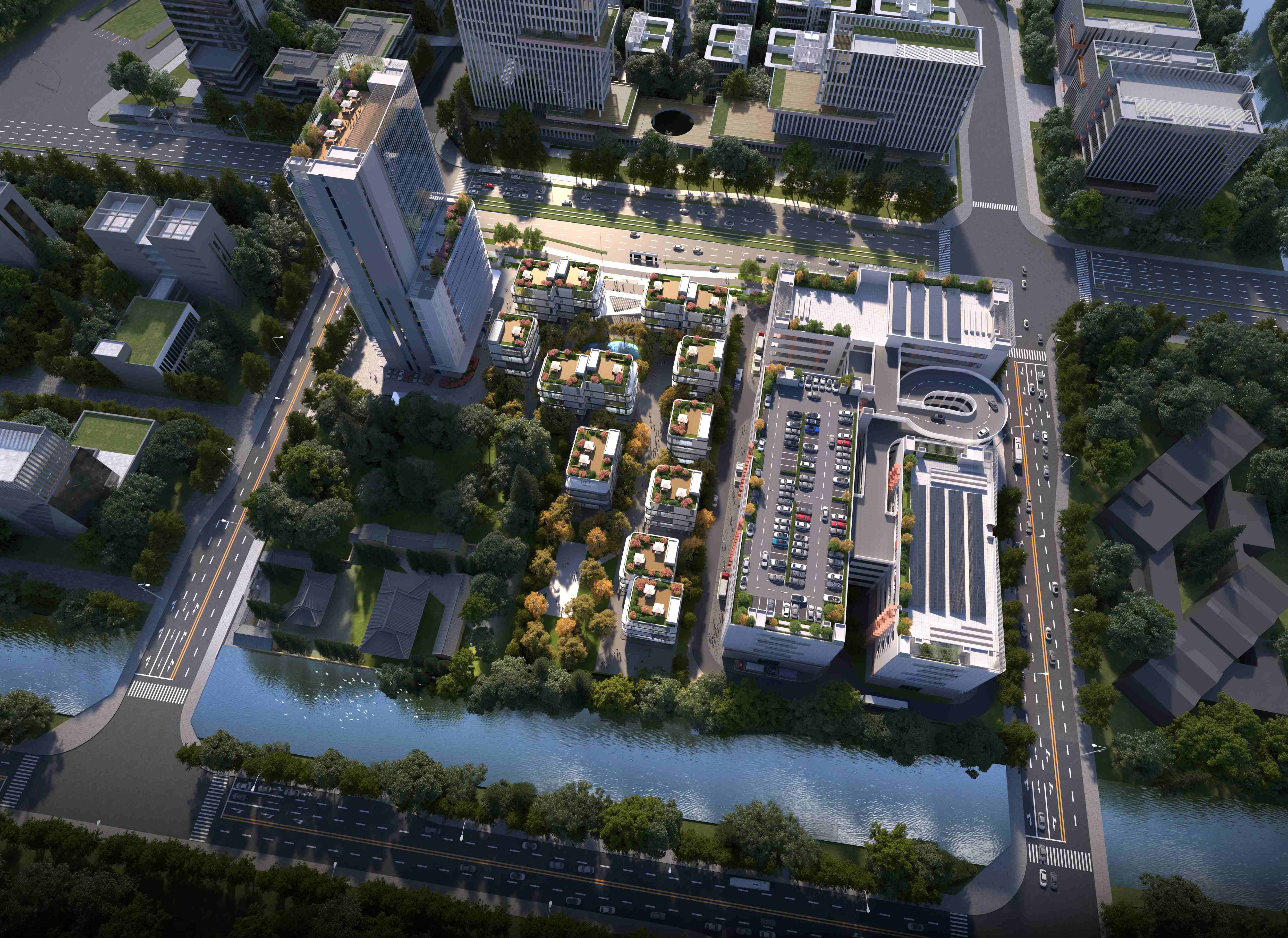
SuZhou I-PARK Industrial Park Project
Country City:Suzhou,Jiangsu
Area:20000㎡
Type:Office,
Architectural design
Date:2024
Context and Brief
Located in Jinchang New Town in Suzhou’s Gusu District, Plot E completes the wider Yuanchuang Zhigu Digital Economy Industrial Park. A 36,495-square-metre site must accommodate headquarters offices, technology research, vertical manufacturing, light production and shared industry services. With 116,697 square metres of FAR-counted floor area and approximately 133,500 square metres in total, density and operational complexity are fundamental design conditions rather than secondary constraints.
The question was therefore not simply how to fit more programme onto the site. The project needed to reconcile manufacturing logistics, research collaboration, urban frontage and the everyday experience of work. It also had to establish a credible relationship with Suzhou without reducing local identity to white walls, dark roofs or applied garden motifs.
A Garden-Based Urban Structure
The proposal looks instead to the spatial intelligence of Suzhou’s classical gardens: density balanced by openness, solid mass by void, direct movement by turning paths, and enclosed rooms by layered thresholds. These relationships are translated into a campus structure described as ‘a peak marking the skyline, a mountain-like industrial edge, and a water court held at the centre’.
A research tower of almost 100 metres addresses Huchi Road to the south and gives the campus a visible urban marker. Multi-storey factories form a compact production cluster along the north-western edge, where continuous massing and a circular vehicle ramp support industrial operations and create a coherent boundary. To the south-east, eight lower research buildings gather around a central water garden. Together, towers, factories, courtyards, walkways and landscape form a sequence of changing scales rather than a set of isolated real-estate products.
Vertical Manufacturing as Infrastructure
The predominantly five-storey factory buildings are planned around practical production requirements. Ground, second and typical floors support different manufacturing and pilot-production uses, while generous structural grids allow future tenants to adapt equipment layouts and internal subdivisions. A seven-metre-wide circular ramp connects directly to unloading platforms on each level, enabling trucks to reach upper floors. Separate pedestrian and freight routes, dedicated goods lifts and equipment-hoisting platforms complete the logistics system.
These technical components are treated as architecture rather than hidden back-of-house infrastructure. Daylight, ventilation, roof space, terraces and public edges are integrated with the logistics network through a strategy of ‘vertical garden-making’. The factory retains the clear boundaries required for safe operation, while production remains visibly connected to landscape, sunlight and the wider pedestrian life of the campus.
Courtyards, Thresholds and Everyday Work
The lower research quarter is organised as one shared core with multiple courtyards. Each of the eight buildings can operate independently, yet covered walks, turning paths, gardens and the central water court establish a gradual transition from public to semi-public and private space. Daylight from three sides, full-height glazing, double-height lobbies, terraces and roof gardens bring changing light and planted views into the working day, while supporting informal meetings and outdoor discussion.
Several buildings lift parts of the ground floor to create shared rooms for rest, display, events and small forums. Staggered terraces and elevated platforms extend collective space vertically. Elsewhere, a double-skin facade combines an outer tensile metal mesh with an inner glazed curtain wall, creating a shaded and thermally buffered threshold with perceptible depth. The in-between space is both environmental infrastructure and a place that can be occupied.
Material and Environmental Performance
A restrained palette of white, light grey and warm off-white sets a consistent background across the campus. Aluminium panels, stone, glazed curtain walls and metal mesh are coordinated through common modules, joints and proportions. Vertical fins and horizontal bands give the facades a measured rhythm, while localised micro-ventilation and double-skin assemblies link environmental performance with changing light and shadow. Suzhou is expressed through calibration, layering and material restraint rather than literal historical form.
Green roofs, permeable paving, sunken planting areas and rainwater infrastructure establish a cycle of retention, detention, infiltration, filtration, reuse and discharge. Photovoltaic arrays, energy-efficient envelopes, native planting and seasonal landscape reduce operational demand and long-term maintenance. These systems are embedded in the basic organisation of the buildings and site rather than added as independent technical features.
An Ecology for Growth
The campus also supports an industrial ecology through a range of building scales and tenure models. The research tower and self-operated factories can accommodate established headquarters and anchor companies; independent research buildings and subdivisible factory floors serve growing businesses; and incubation spaces provide an entry point for smaller teams. The spatial offer can therefore evolve with different stages of enterprise development.
Plot E is not conceived as an industrial park decorated with a garden. It uses the garden as an organisational method—one that coordinates production, research, movement, exchange and environmental systems within a dense urban site. Industry and poetics are allowed to coexist because operational precision and spatial generosity are designed as parts of the same framework.
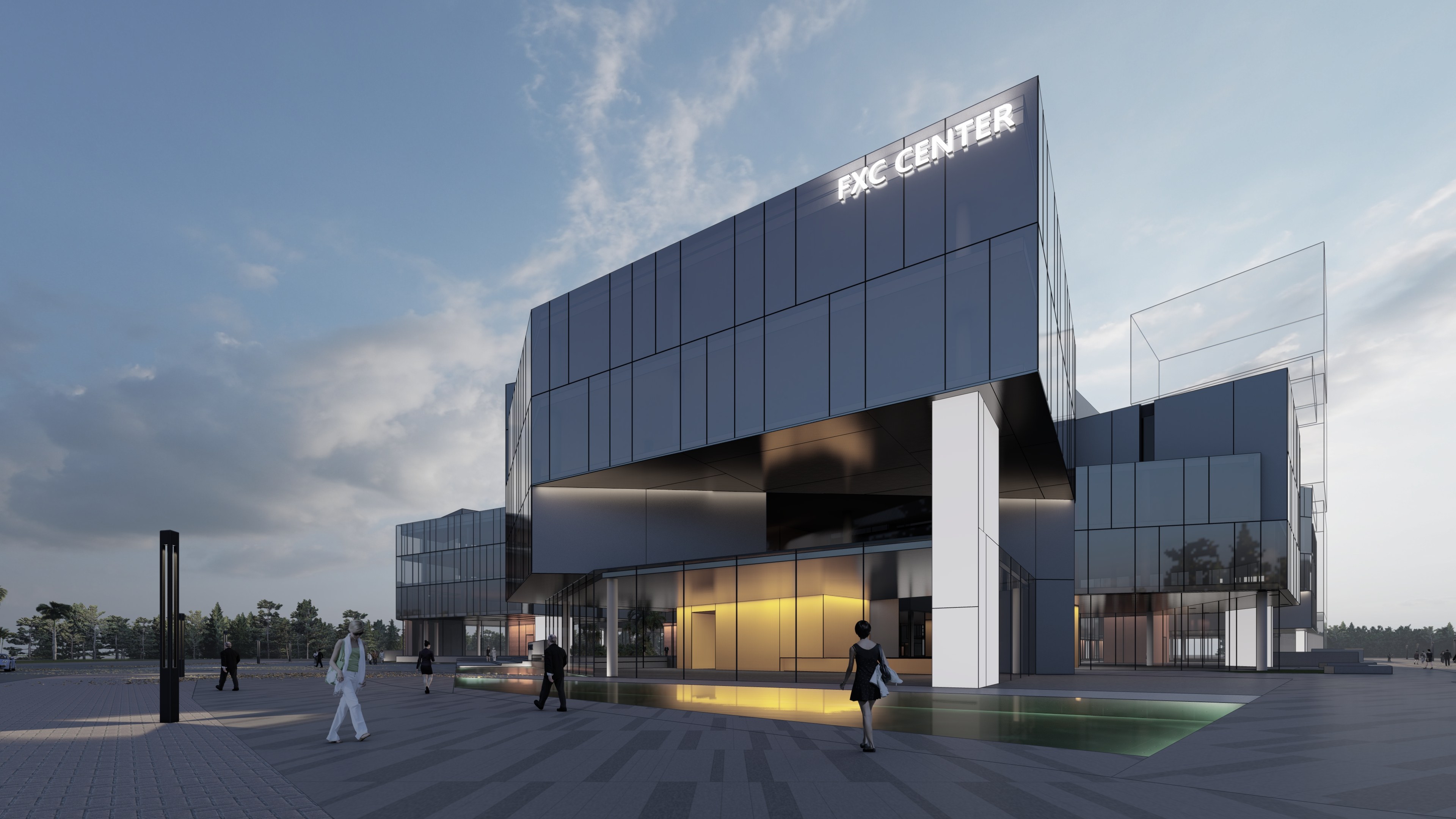
Haikou Fuxingcheng Future Enterprise Headquarters Office Park
Country City:Haikou, Hainan
Area:
Type:Office,
Architectural design
Date:2022
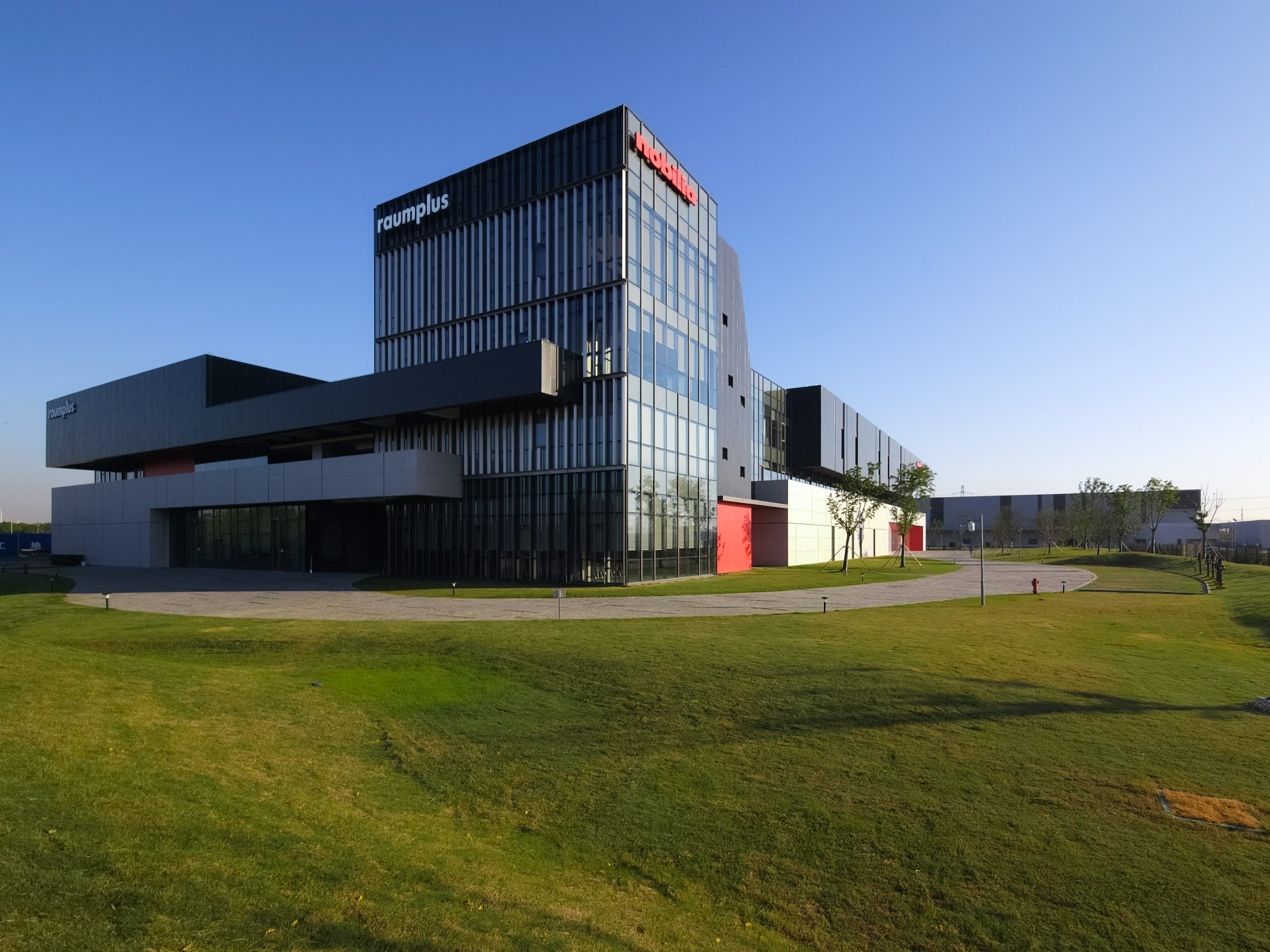
Wuxi Raumplus Asia-Pacific R&D Center
Country City:Wuxi, Jiangsu
Area:
Type:Office,
Architectural design
Date:2023
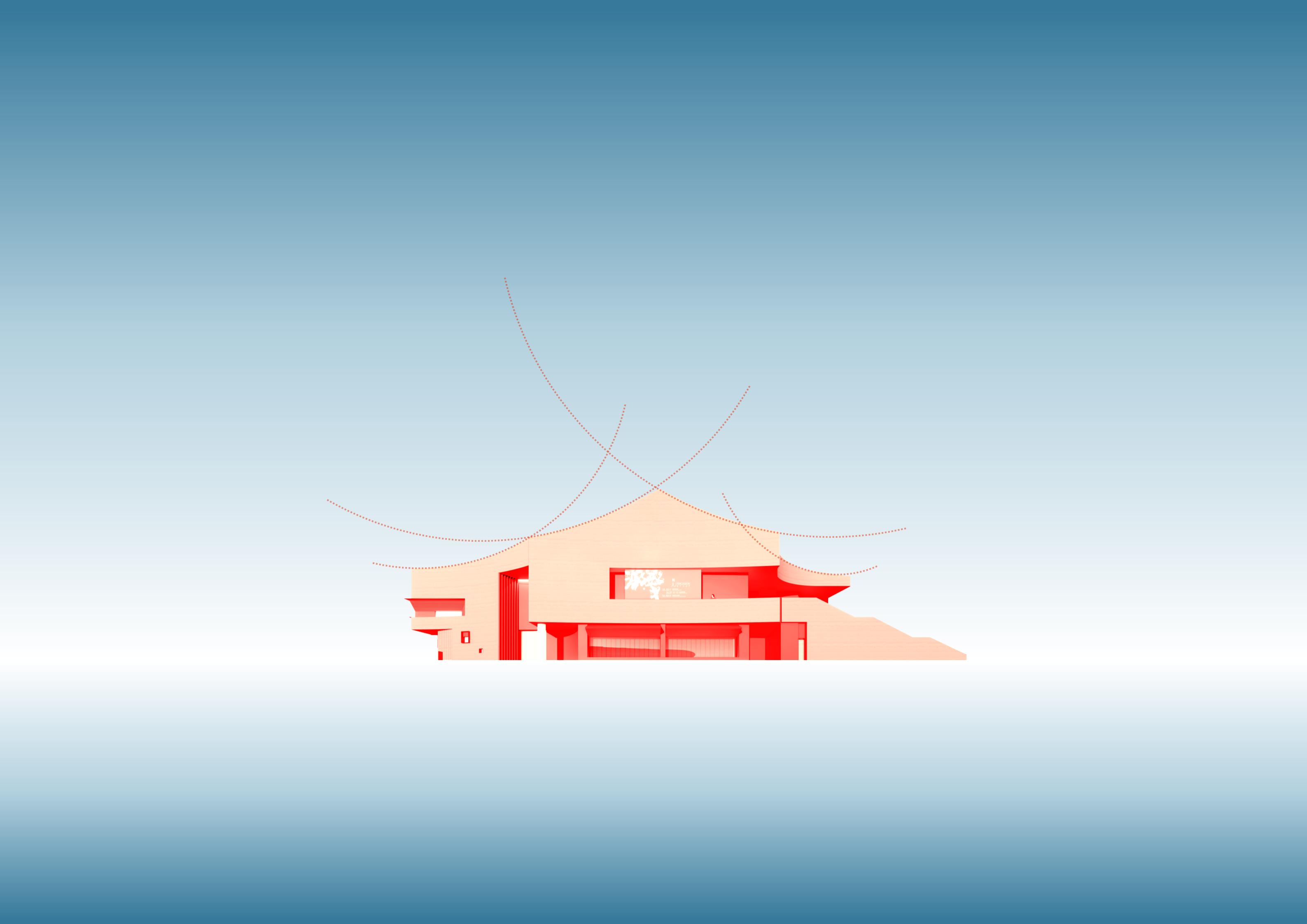
Between Landscape and Performance. Between Theatre at Tianyu Lake
Country City:Hanchuan, Hubei
Area:
Type:Culture,
Architectural design
Date:2025
A lakeside theatre adapted from a former sales centre, using open thresholds and a flexible stage to bring audience, performance and landscape into one shared narrative.
Context and Brief
The project occupies a former sales centre at the heart of the Tianyu Lake International Leisure Community in Hanchuan, Hubei. Set above the shoreline with an open view across the lake, the building had a strong landscape position but was planned for display and reception: its programme was limited and its enclosure too closed for performance, gathering and cultural exchange. The concept of ‘Between’ asks how the renewal can renegotiate relationships between building and landscape, inside and outside, audience and performer, and an old commercial function and a new public use.
Building and Site
The main structure is retained, with selective reinforcement, openings, walkways and envelope upgrades enabling the conversion. Sculptural solid volumes give the theatre a clear identity, while red metal panels, terrazzo, transparent glass and textured render create a concise but visible material palette. Ground-floor openings, a second-floor covered link and a semi-outdoor stage admit wind, daylight and lake views. By day the theatre reads as a quiet marker on the water’s edge; after dark, performance and light reveal the building as an active cultural container.
A New Performance Relationship
Rather than relying on a single proscenium configuration, the theatre softens the conventional ‘fourth wall’ between performance and audience. A layered spiral arrangement organises seating and sightlines, while the semi-outdoor stage can extend towards the lake and landscape plaza. Water, trees and changing weather become part of the visual field. The audience can experience the work from different positions and distances rather than remaining fixed in front of a single framed stage.
Three stage depths—7.2, 9 and 6 metres—combine with fixed and movable seating to accommodate drama, music, talks and more experimental formats. Performance, pre-show, quiet and dispersal modes support the full event sequence. The foyer brings together ticketing, a bar and waiting areas; dressing and changing rooms support the backstage operation; tea and opera rehearsal spaces on the upper floor, together with a ground-floor screening room, extend the building’s everyday cultural programme. Audience, staff and landscape routes are organised separately to manage event-day movement.
Adaptive Reuse
A limited structural intervention changes the public role of the existing building. A temporary sales facility becomes a cultural venue with a longer civic life, and the lake shifts from scenic backdrop to an active component of performance. ‘Between’ is therefore more than a project name: it is a method for designing thresholds, allowing old and new, solid and void, nature and art to retain their identities while entering into a shared experience.